
Signs you need this
- • Long cracks that keep coming back after painting, especially running from door and window corners across a ceiling or wall.
- • Walls that sound hollow when tapped and flex under hand pressure, a sign the plaster has let go of the wood lath behind it.
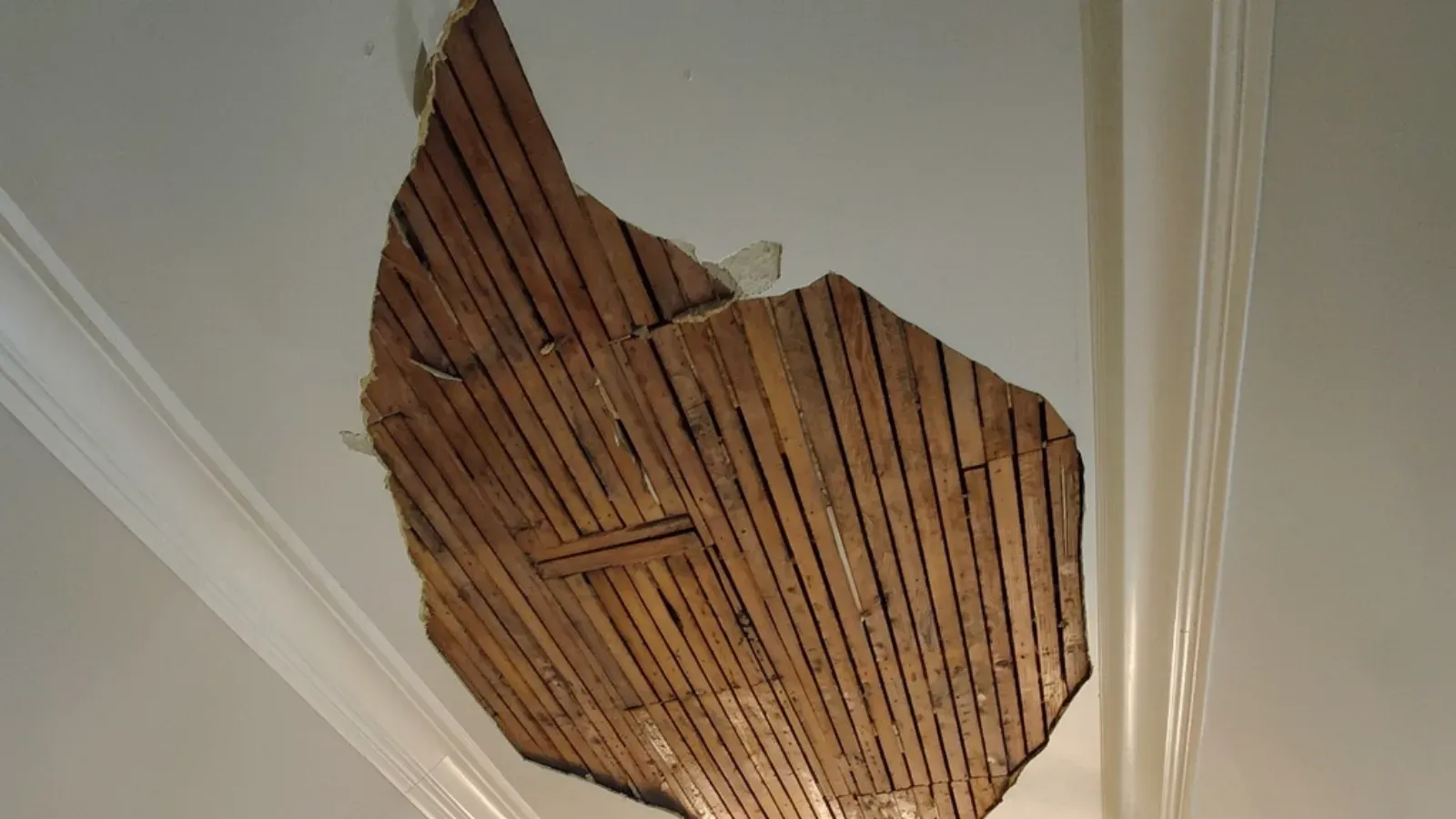
- • Chunks of plaster falling, a bulging belly in a ceiling, or crumbling brown-coat where the surface has separated from its base.
Lynn Drywall & Plaster either repairs and re-skims existing plaster so it reads as one solid historic surface again, or converts a room from tired lath-and-plaster to modern drywall. On the repair side, that means re-anchoring loose plaster to the lath, filling cracks so they stop returning, and skim-coating the whole wall or ceiling smooth. On the conversion side, the old plaster and lath come down and new gypsum board goes up in its place. The right choice depends on how much of the plaster is still sound and whether the owner wants to keep the original character.
The work suits owners of Lynn’s shoe-era worker cottages, two-families, and triple-deckers built almost entirely with lath and plaster during the footwear boom, and homeowners in the plaster-heavy established neighborhoods of the Highlands, Wyoma, and Pine Hill, where single and two-family homes predate the war. It fits preservation-minded owners who want cracked or historic plaster ceilings repaired and skimmed rather than torn out, as well as renovators who would rather convert a failing plaster room to modern drywall for a flat, durable finish that takes fixtures and paint cleanly.
How lath-and-plaster actually fails
The plaster in Lynn’s older homes was troweled onto thin wood lath, and it holds because wet plaster squeezed between the lath strips and formed keys that hook behind the wood. After a century of vibration, settling, and seasonal movement, those keys crack and crumble off the lath, and the plaster loses its grip. That is what a homeowner feels as a wall that sounds hollow and flexes under a hand, and what shows up as long cracks running from door and window corners that come back no matter how many times the wall is painted. Painting hides the line; it does nothing about the plaster that has let go behind it.
Repair or convert, and how the call gets made
The right fix depends on how much of the surface is still bonded to the lath. Where the plaster is mostly sound, Lynn Drywall & Plaster re-anchors it to the lath, cuts and keys the cracks so they stop reopening, and skim-coats the wall or ceiling back to one solid surface. Where it has failed widely, or where a ceiling has bellied away from the lath under its own weight, the old plaster and lath come down and new gypsum board goes up in its place. A preservation-minded owner in the Highlands or Wyoma often wants the historic-sensitive skim that keeps the original plaster; a renovator gutting a room usually prefers the conversion for a flat, durable finish that takes fixtures and paint cleanly. The crew gives a straight recommendation room by room rather than defaulting to a tear-out, because a sound plaster wall is worth saving and a failed one is not worth chasing.
Matching a converted room to the plaster next door
A converted room does not have to announce itself. New drywall finished to a Level 5 skim can be brought close to the flat, hard look of original plaster, so a modernized room does not stand out against the plaster rooms beside it. That match matters most in a house where only one or two rooms are being redone and the rest stay original, which is the usual case in the shoe-era cottages, two-families, and triple-deckers built during the footwear boom.
Lead-safe is not optional in a pre-1978 home
Nearly every plaster house in Lynn predates 1978, so old painted surfaces almost always carry lead, and disturbing them, whether cutting a crack or demolishing a wall, is done under EPA RRP lead-safe practice with the area contained and cleaned so the dust is controlled. Plaster work is generally scheduled rather than rushed, but a heavy sagging ceiling actively dropping material is a safety call and moves up the list. Either way, the owner knows before work starts what is being saved, what is being rebuilt, and how the dust is being handled.
Materials & standards
Products & materials we use
- USG Sheetrock
- National Gypsum Gold Bond
- CertainTeed
- joint compound
- FibaTape
Standards & codes we work to
- Massachusetts State Building Code (780 CMR)
- GA-214 finish levels (Level 4/5)
- ASTM C1396
- EPA RRP (pre-1978 lead-safe)
What the terms mean
- lath and plaster
- plaster-to-drywall conversion
- historic-sensitive skim over lath
- skim coat
- Level 5 finish
- re-keying cracks
- brown coat
- mud and tape
- corner bead
Options & variants
| Option | When it applies | Cost |
|---|---|---|
| Crack repair & skim | Plaster is mostly sound but cracked and worn | Lowest; re-key, fill, and skim over the existing surface |
| Historic-sensitive skim over lath | An owner wants to preserve original plaster character | Moderate; careful re-anchoring and full skim, slower and hand-worked |
| Plaster-to-drywall conversion | Plaster is failing widely or the owner wants a modern finish | Higher; full demo of plaster and lath, then hang, tape, and finish new board |
| Ceiling belly reset | A ceiling has bellied but is worth saving | Moderate to high; re-secure to joists and skim, or convert if too far gone |
What affects cost
- • How much of the plaster is still bonded: spot repairs are cheap, but a wall that has to be fully re-skimmed or torn out is a different scope.
- • Whether the job is a repair-and-skim or a full conversion, since conversion adds demolition, debris removal, and disposal of old lath and plaster.
- • The finish level the owner wants, from a serviceable Level 4 to a glass-smooth Level 5 skim that matches original plaster flatness.
- • Ceiling versus wall work, because overhead plaster is heavier, slower, and harder to hold.
- • Lead-safe (EPA RRP) containment, which nearly always applies in Lynn's pre-1978 homes when old painted plaster is disturbed.
What to expect
- 1
Inspect and recommend
Lynn Drywall & Plaster inspects the plaster, taps and probes for how much has separated from the lath, and talks through whether repair-and-skim or conversion makes more sense for the room and budget.
- 2
Protect and contain
The space is protected and, in these older homes, contained for lead-safe practice before any disturbance.
- 3
Re-anchor or demo
For repair, loose plaster is re-anchored to the lath and cracks are cut and keyed so they will not re-open; for conversion, the old plaster and lath are taken down and hauled out.
- 4
Build the surface back
The surface is built back up: a full skim coat over the repaired plaster, or new gypsum board hung and taped where the room is being converted.
- 5
Finish to level
The finish is worked to the agreed level, matching the flat, hard look of original plaster or a clean modern drywall finish.
- 6
Clean and hand off
The room is cleaned and walked through, ready for primer and paint.
When this isn’t the right call
- If the plaster failed because water is actively coming through it from a leak above, the moisture has to be handled first with water damage drywall repair.
- If the wall or ceiling is already drywall and just cracked at the seams, it does not need plaster work, and ceiling or drywall crack repair is the better fit.
- If the plaster is contaminated with mold behind a damp surface, it needs removal and remediation-aware handling, not a cosmetic skim, so mold drywall replacement is the better fit.
Frequently asked questions
Should I repair the plaster or convert the room to drywall? +
It depends on how much plaster is still bonded and how much you value the original finish. Lynn Drywall & Plaster checks the walls and gives you a straight recommendation; sound plaster is worth skimming, but widely failed plaster is often cheaper and better converted.
Can you save the old plaster ceiling instead of tearing it out? +
Often, yes. If the plaster is still keyed to the lath in most spots, it can be re-anchored and skimmed so it reads as one solid historic surface again. If it has let go across the whole ceiling, conversion is the honest call.
Why do my plaster cracks keep coming back no matter how many times I paint? +
Painting only hides the crack. In lath-and-plaster the crack returns because the plaster has lost its grip on the lath or is moving; it has to be cut, keyed, and skimmed to actually stop.
Will converting to drywall match the rest of my old house? +
A skim-coat Level 5 finish on new drywall can be brought close to the flat, hard look of original plaster, so a converted room does not stand out against the plaster rooms next to it.
Is the dust from plaster removal a problem in an old Lynn home? +
It can be, because pre-1978 homes often have lead paint. Lynn Drywall & Plaster works lead-safe under EPA RRP practice, containing and cleaning the area so the dust is controlled.
How long does a plaster-to-drywall conversion take? +
A single room is usually a few days once demo, hanging, taping, and finishing are counted, with drying time between coats. Lynn Drywall & Plaster gives a room-by-room schedule up front.