
Signs you need this
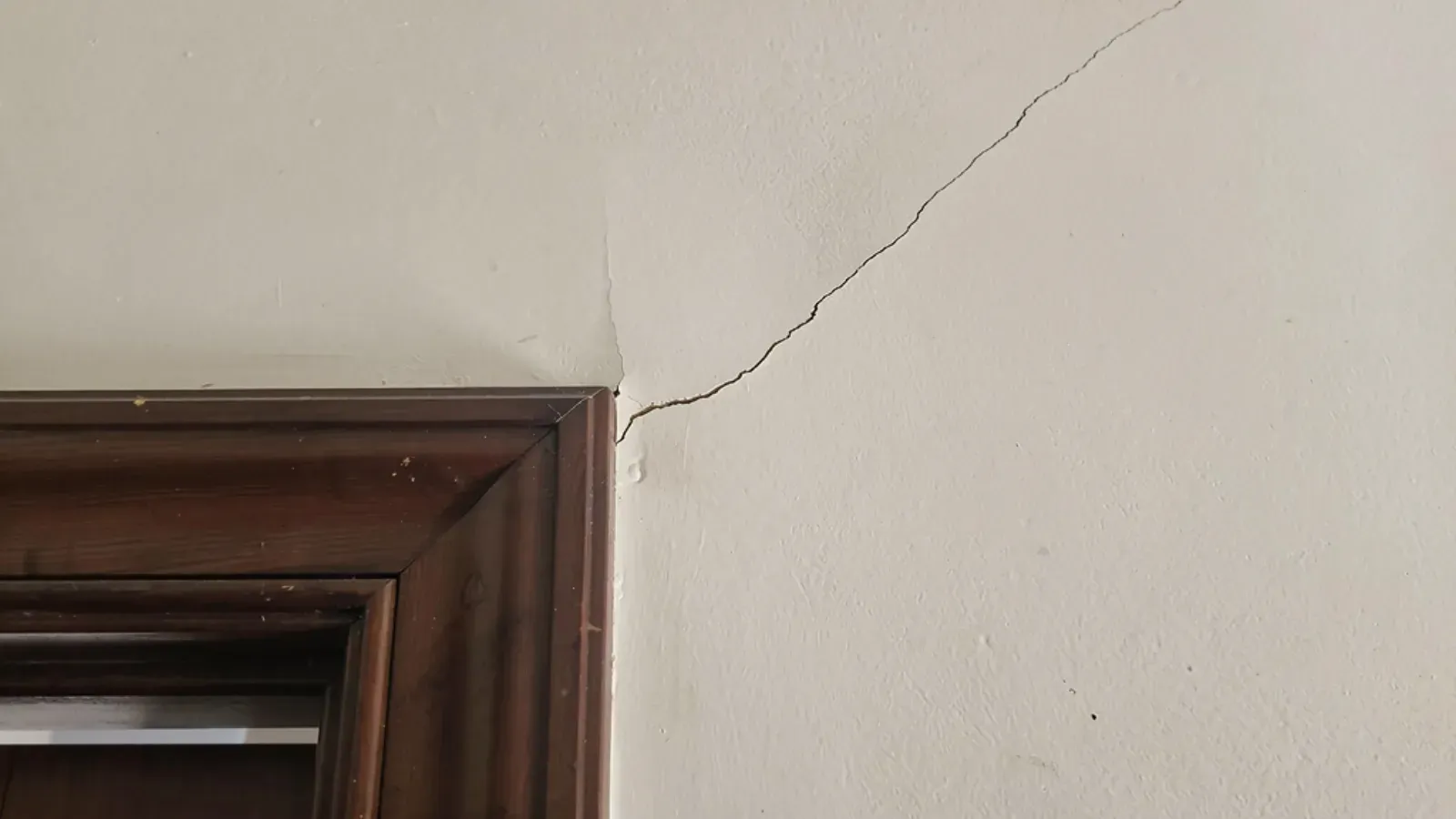
- • A hairline crack running diagonally from a doorway or window corner in an East Lynn two-family, often widening slightly with the seasons.
- • A crack along a corner bead that keeps reappearing at the same spot after being painted over more than once.
- • A ceiling-to-wall crack that runs the full length of a room, sometimes accompanied by a faint gap or shadow line.
- • The same crack comes back a second or third time after a homeowner or previous contractor filled and painted over it without addressing the cause.
- • A crack noticeably widens after a hard winter freeze-thaw cycle or after nearby construction or traffic vibration.
Drywall crack repair addresses both the visible crack and, where possible, the underlying movement causing it. Lynn Drywall & Plaster distinguishes between a simple cosmetic crack from age or minor settling, which responds to a properly taped and compound repair, and a recurring structural crack that keeps reopening because something behind the wall is still moving. The repair gets reinforced with mesh tape or a corner bead replacement where needed, rather than just skimming compound over the surface, which is why the repair holds instead of reopening after the next season.
This service is for owners of East Lynn’s older two-families and triple-deckers where a century of minor foundation settling shows up as recurring drywall or plaster cracking, and for homeowners who’ve had a crack painted over multiple times by a previous owner or handyman and are frustrated it keeps returning. It’s also for properties near the Lynnway’s industrial corridor or rail lines where low-frequency vibration can aggravate an already-stressed seam over time, and for anyone noticing a new crack after a renovation, an addition, or seasonal freeze-thaw movement in an older foundation.
Reading a crack before repairing it
Not every crack means the same thing. A short, stable hairline near a doorframe is often just normal seasonal wood movement transmitted through the drywall. A crack that keeps widening, or that runs at a consistent diagonal from a window or door corner across multiple visits, points to something still moving behind the wall. Before anything opens up, the homeowner gets asked how long the crack has been there and whether it’s been repaired before, because a crack’s history tells as much as its current width.
Why East Lynn’s older housing sees this pattern often
East Lynn’s stock of century-old two-families and triple-deckers has had a long time to settle, and minor, ongoing foundation settlement is normal in construction this age. That settlement shows up first in drywall and plaster, at the weakest points in the wall assembly: door and window corners, where the framing already concentrates stress, and along ceiling-to-wall junctions where two different structural planes meet. A crack repair in one of these homes isn’t just a cosmetic fix, it’s often the most visible evidence of a building’s slow, ordinary movement over a century.
The difference between filling and repairing
The most common shortcut seen from prior work is a crack that’s been filled with compound directly over the gap and painted, with no reinforcement underneath. That approach might hold for a season, but it has nothing to grip onto once the wall moves again, so the same crack reopens along the exact same line. A proper repair cuts the crack out to expose sound board on both sides, then bridges it with mesh tape embedded in compound, which spreads the stress across a wider area instead of concentrating it back at a single seam.
Corner bead as a specific failure point
A meaningful share of the recurring cracks seen here aren’t in the open field of a wall at all, they’re along an outside corner where the corner bead, the metal or rigid strip that protects and shapes that edge, has been bent or knocked loose at some point. Recoating over a damaged bead just hides the problem temporarily; the bead itself needs to come off and be replaced before the crack repair will actually hold.
When a crack is telling you something bigger
Occasionally a crack pattern is broader than a single doorway or corner: multiple cracks across several rooms, doors that have started sticking, or a crack that’s visibly widened month to month. That pattern gets a direct flag to homeowners, because it points toward something worth a structural or foundation opinion before more drywall work goes on top of a problem that isn’t finished moving yet. Fixing the surface without addressing that kind of movement is a repair that won’t last, and it’s better to say that upfront than sell a fix that isn’t believed to hold.
Materials & standards
Products & materials we use
- USG Sheetrock
Standards & codes we work to
- Massachusetts State Building Code (780 CMR)
What the terms mean
- mesh tape
- corner bead
- feathering
- settling crack
- recurring crack
- joint compound
Options & variants
| Option | When it applies | Cost |
|---|---|---|
| Hairline surface crack repair | Stable, cosmetic crack from age or minor seasonal movement | Lower cost, single visit |
| Corner bead replacement | Crack running along a damaged or bent corner bead | Moderate, includes removing and reinstalling the bead |
| Recurring structural crack, reinforced repair | Crack has reopened multiple times at the same location | Higher labor, includes mesh reinforcement and monitoring recommendation |
What affects cost
- • Length and location of the crack, since a ceiling-length crack takes more material and scaffolding time than a short wall crack.
- • Whether the crack is a first-time repair or a recurring one needing reinforcement beyond a standard tape-and-mud fix.
- • Corner bead condition, since a bent or damaged bead usually needs replacing, not just recoating.
- • Whether the crack traces to an identifiable cause, settling, vibration, or seasonal movement, that's worth flagging to the homeowner.
- • Texture and paint match needed to blend the repaired line into the surrounding wall.
What to expect
- 1
Examine the crack's pattern
The crack's pattern, width, and location get examined, and whether it's new or has reappeared after a prior repair gets asked.
- 2
Cut out along its length
The crack is cut out along its length rather than just filling the surface line, to expose sound material on both sides.
- 3
Reinforce or replace the bead
The crack is reinforced with mesh tape, or the corner bead is replaced if the crack runs along a damaged corner.
- 4
Build compound in thin coats
Compound is applied in thin coats, feathering wider each pass so the repair sits flush with the surrounding wall.
- 5
Sand, texture-match, and prime
The repaired line is sanded, texture-matched, and primed so it blends into the wall once painted.
- 6
Flag suspected structural cause
For a crack with a suspected structural cause, the homeowner gets a plain read on what was seen and whether it's worth a broader look.
When this isn’t the right call
- If the crack is part of a broader pattern across multiple rooms suggesting foundation movement beyond drywall repair, that calls for a structural or foundation assessment before any drywall work proceeds.
- If the damage is really a hole or impact mark rather than a crack, drywall repair and patching is the better fit.
- If the crack is in original lath-and-plaster rather than drywall, plaster repair and conversion is the better fit.
Frequently asked questions
Why does my crack keep coming back after I paint over it? +
Painting over a crack without cutting it out and reinforcing it just hides it temporarily. If there's ongoing minor movement behind the wall, a surface-only fix will reopen along the same line.
Is a crack in my wall a sign of a foundation problem? +
Not usually. Most cracks seen here are cosmetic, from age, seasonal movement, or a bent corner bead. You'll get an honest read if a pattern looks like it needs a structural look rather than a drywall repair.
What's a corner bead and why does it crack? +
It's the metal or plastic strip that protects an outside wall corner. It cracks when it's been bumped, bent, or wasn't fastened well originally, and the fix is usually replacing the bead, not just recoating over it.
My house is old and near industrial traffic. Could that be causing the crack? +
Vibration from nearby heavy traffic or rail lines can aggravate an already-stressed seam in older construction, though it's rarely the sole cause. The whole picture gets looked at before concluding what's driving it.
How do you keep the crack from coming back this time? +
The crack is cut out, reinforced with mesh tape or a new corner bead, and the compound is built up in layers rather than filling the surface line directly, which is what gives the repair something to hold onto.
Can you match the paint after the crack repair? +
Paint touch-up can be coordinated as part of the job, or the area is left primed and ready if you're handling paint yourself.