
Signs you need this
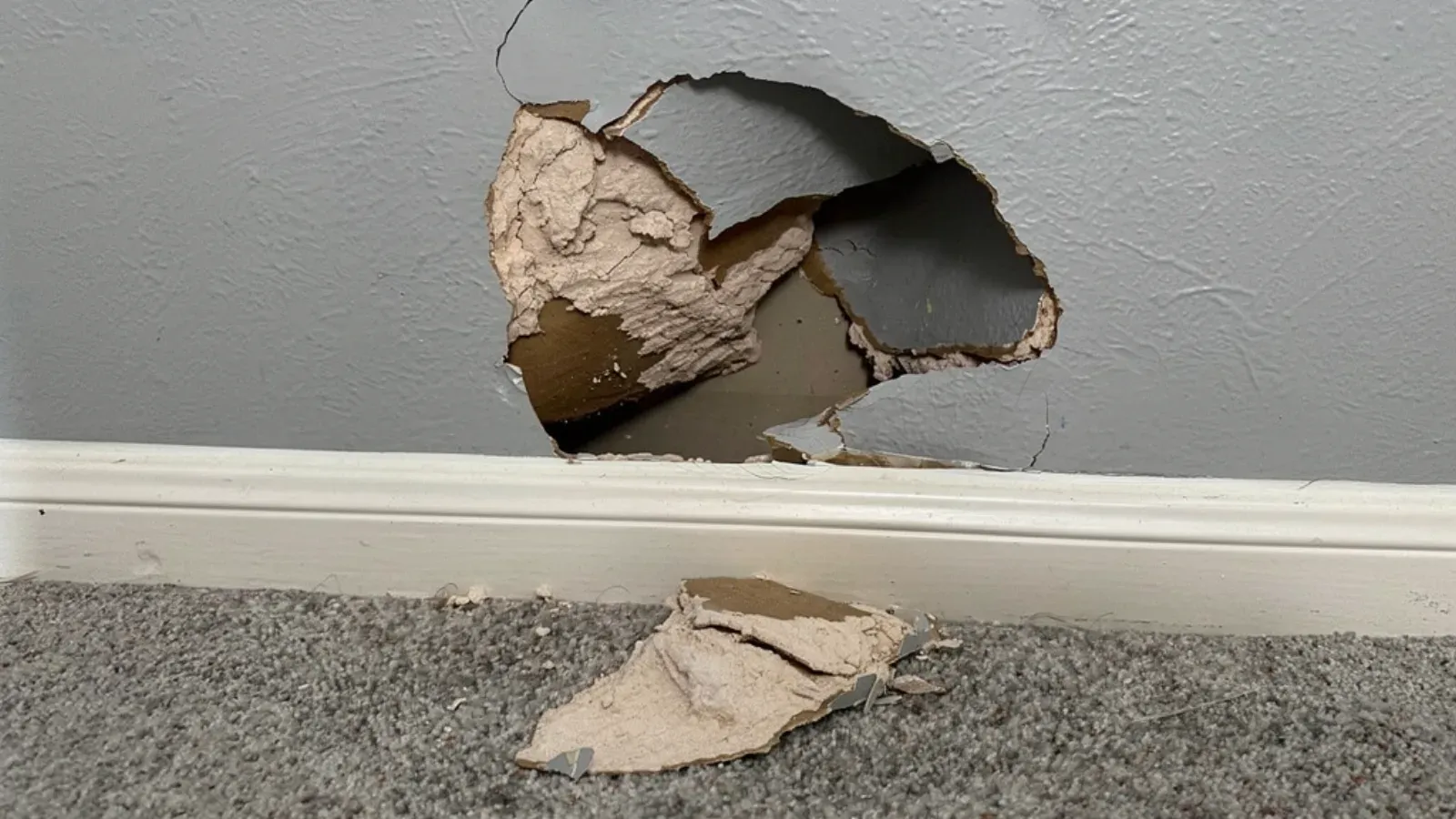
- • A doorknob hole punched through a bedroom or hallway wall where a door was opened too hard against a stop that was never installed.
- • Nail pops, dents, and gouges left behind after moving furniture in or out of a Brickyard triple-decker unit between tenants.
- • Small holes from removed shelving, TV mounts, or old cable runs that need to disappear before repainting.
- • A landlord or property manager has a fixed turnover window between tenants and needs walls patched fast and cleanly.
Drywall repair and patching covers the everyday damage that comes with a lived-in or rented property: holes, dents, cracks, and gouges. Lynn Drywall & Plaster matches the repair method to the damage, using a simple compound fill for small dents, a patch panel keyed into the surrounding board for larger holes, and mesh tape reinforcement for cracks prone to reopening. The goal on every patch is the same: once painted, it should be invisible, not just filled.
This service is for landlords and property managers across Lynn’s Brickyard and West Lynn triple-decker stock managing unit turnover between tenants, and for homeowners with everyday household damage: doorknob holes, dents from moved furniture, or holes left by removed fixtures. It’s also for condo owners and associations needing a unit patched before a sale, rental listing, or new resident move-in, and for anyone renting who’s responsible for restoring a wall to move-in condition before a lease ends.
Turnover volume shapes how this service is delivered
Lynn’s rental market, with its high renter share and steady unit turnover across the Brickyard and West Lynn’s dense triple-decker stock, means a meaningful share of drywall repair calls here aren’t a single homeowner’s one-off dent, they’re a landlord or property manager clearing a full unit of accumulated damage between leases. That changes how the job runs. Instead of one hole, there might be six or eight across several rooms: doorknob punches, TV mount holes, nail pops from hung art, gouges from moved furniture. The whole unit gets walked up front and every spot scoped in one pass, so the repair happens in a single coordinated visit rather than a string of separate service calls, which matters when a property manager is working against a fixed lease-start date.
Matching the repair to the damage, not defaulting to one method
Not every hole gets the same treatment. A small nail hole or minor dent is a compound fill, sanded flush, done in minutes. A doorknob-size hole needs a cut patch panel sized to the opening, keyed into the surrounding board, and often backed with drywall clips or a scrap of board behind the cut edge so the patch has something to anchor to rather than floating unsupported in the gap. Skipping that backing step is a common shortcut that leaves a patch feeling soft or eventually cracking loose at the edges under normal wall pressure.
Why texture match is part of the repair, not an add-on
A structurally sound patch that doesn’t match the surrounding wall’s texture, whether that’s a smooth painted surface, a light knockdown, or an older home’s slightly uneven plaster-adjacent finish, still reads as damage once it’s painted. Texture matching is a required last step on every patch, not a separate upsell, because a technically correct repair that’s visually obvious under a lamp hasn’t actually solved the customer’s problem.
Backing damage into context: what a hole tells you
A doorknob hole almost always means there’s no door stop installed, or the existing one has failed, which is worth fixing at the same time so the same wall doesn’t get punched through again in a year. That gets mentioned to homeowners when it’s spotted, since a five-dollar door stop is a lot cheaper than a repeat repair call.
Working around a lease clock
Property managers scheduling turnover work in Lynn’s rental stock often have days, not weeks, between a tenant moving out and the next one moving in. The estimate and scheduling commitment is sized to that reality: a multi-hole turnover patch is priced and booked as a single unit job, with a direct read on how much drying and sanding time a given scope actually needs so a property manager can plan the paint crew and cleaning around a realistic finish date rather than guessing.
Materials & standards
Products & materials we use
- USG Sheetrock
- National Gypsum Gold Bond
- FibaTape
Standards & codes we work to
- Massachusetts State Building Code (780 CMR)
What the terms mean
- patch panel
- drywall clips
- mesh tape
- texture match
- mud and tape
- joint compound
- corner bead
Options & variants
| Option | When it applies | Cost |
|---|---|---|
| Small dent or nail hole fill | Minor cosmetic damage, no structural gap | Lowest cost, fast turnaround |
| Doorknob-size hole patch panel | Impact damage or accidental hole through the board | Moderate, includes cutting and taping a new panel section |
| Multi-hole turnover patch (per unit) | Landlord/PM prepping a full unit between tenants | Priced per unit, bundled visit |
What affects cost
- • Number and size of holes or damaged spots in a given unit or room.
- • Whether the wall behind the hole needs backing added, drywall clips or a scrap backer, before the patch panel goes in.
- • Texture matching required to blend the patch into knockdown, orange-peel, or smooth surrounding wall.
- • Access and scheduling, especially for a landlord working a tight turnover window between tenants.
- • Paint touch-up needs after the patch cures.
What to expect
- 1
Walk the space and scope damage
The unit or room is walked with the customer, or the property manager, to identify every hole, dent, or crack to be addressed in one visit.
- 2
Cut back and add backing
Ragged edges are cut back and backing is added behind larger holes so the patch has something solid to anchor to.
- 3
Set panels and coat
Patch panels are set or compound is applied, then taped and coated in thin layers, sanding lightly between each.
- 4
Texture-match the patch
The patch is texture-matched to the surrounding wall so it doesn't stand out under normal light.
- 5
Final inspection and hand-off
A final inspection pass leaves the wall ready-to-paint, or touch-up paint is arranged if requested.
When this isn’t the right call
- If the wall's texture doesn't match after patching and needs a broader blend across the panel, texture matching is the better fit.
- If the damage is a recurring crack along the same line rather than a one-time hole or dent, drywall crack repair is the better fit.
- If the damage traces to water rather than impact, ceiling repair is the better fit for ceilings or a water-damage assessment for walls.
Frequently asked questions
Can you patch multiple holes in one visit? +
Yes, this is common for landlords and property managers doing unit turnover. The space gets walked, every spot noted, and all of them patched in one scheduled visit.
Will the patch be visible after painting? +
Not if the texture is matched correctly. Every patch is checked under normal room light before it's called finished, and it should blend into the surrounding wall.
How fast can you turn around a rental unit between tenants? +
Lynn Drywall & Plaster works with property managers on turnover timelines. Most straightforward patch jobs, even multi-hole units, complete in a single visit.
Do you also handle the paint touch-up? +
Touch-up paint can be coordinated as part of the job, or the patch is left primed and ready if you have your own painter.
What's the difference between a patch and a full panel replacement? +
Small holes and dents get filled with compound directly. Larger holes need a cut patch panel keyed into the surrounding board, since compound alone won't span a gap that size.
My wall has a small crack, not a hole. Is that the same repair? +
A single small crack can often be part of this scope. A recurring crack that keeps reopening along the same line usually needs a different approach, which gets flagged during the walk-through.