
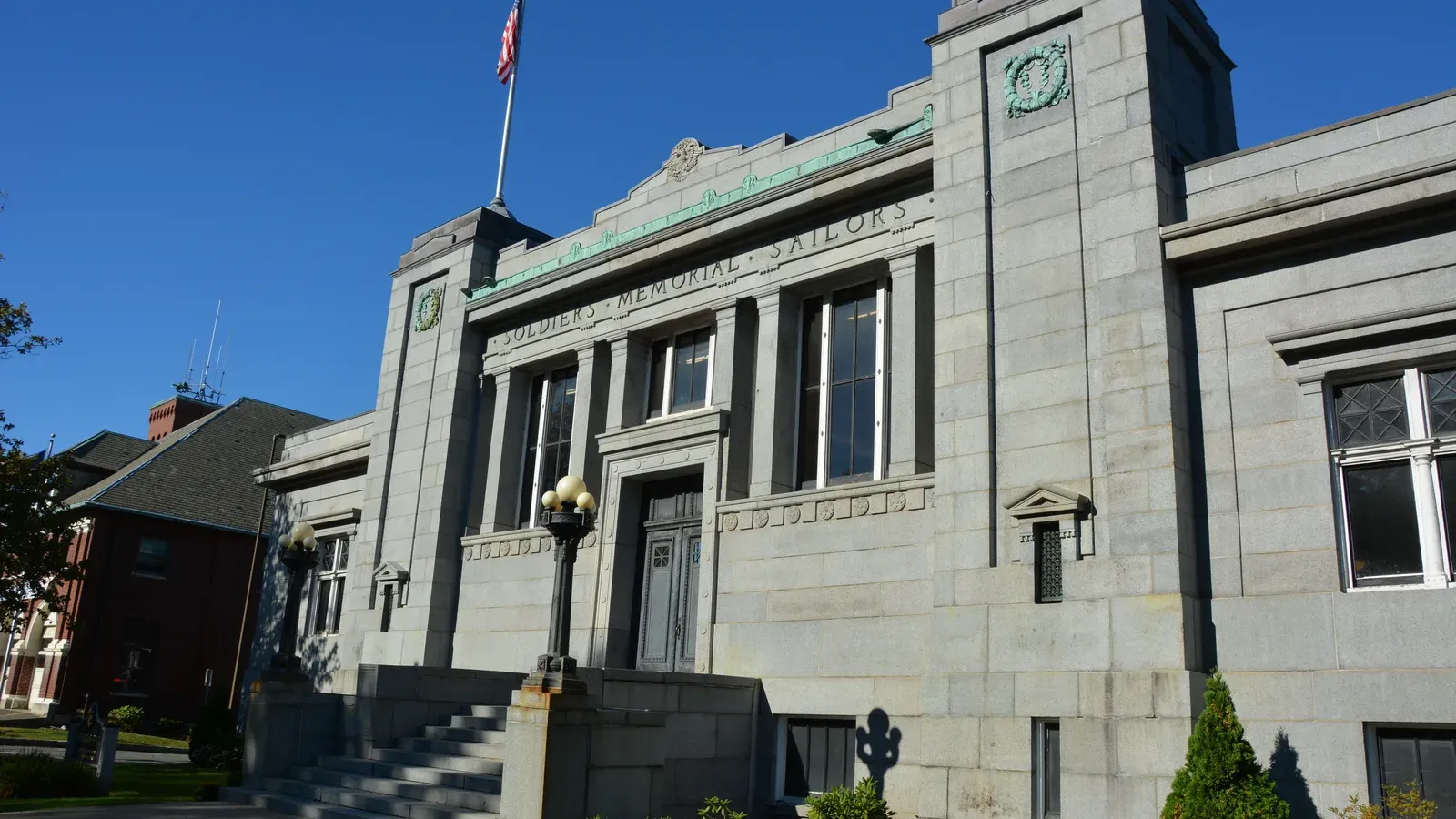
West of Lynn, roughly 7 mi / ~15 min. Lynn Drywall & Plaster books Melrose estimates within the week, and treats plaster ceiling damage in the city's older Victorian homes as a priority since original lath only gets harder to save the longer a leak goes unaddressed.
Drywall and plaster in Melrose, MA
Melrose sits west of Lynn, about a fifteen-minute drive, and it’s a classic Victorian streetcar suburb, one of the most architecturally intact plaster-era towns Lynn Drywall & Plaster covers. The city’s dense, well-preserved stock of late-19th and early-20th-century homes surrounds Melrose Center and Main St, with two MBTA commuter-rail stations, Melrose/Cedar Park and Wyoming Hill, anchoring residential neighborhoods that grew up around the rail line rather than the automobile. Some later infill construction fills in the gaps, but the character stock that defines Melrose is the period Victorian.
A city built plaster-first
Because Melrose grew up in the streetcar-suburb era, its dominant housing type is original lath-and-plaster, not drywall. The standard job in a Melrose Victorian is a historic-sensitive skim coat that repairs cracking and settling while preserving the plaster interior that gives these homes their character, rather than a wholesale tear-out for new board. After winter, that settling shows up reliably: older Victorians near Melrose Center and around Ell Pond commonly need fresh plaster crack repair as the house shifts with the seasonal freeze-thaw cycle.
Established homeowners, premium expectations
Melrose is a city of established homeowners who tend to invest seriously in their older houses, and that shows up in the finish level they expect from a remodel. Skim coat and Level 5 smooth-wall finishing are common asks here, layered on top of the base plaster-repair work, since a renovated room in a well-kept period home needs to read as flawlessly as the rest of the house. Because nearly all of this housing predates 1978, that work also falls under EPA RRP lead-safe rules, and Lynn Drywall & Plaster handles it as an EPA RRP Lead-Safe Certified Firm on most Melrose jobs.
What’s newer in Melrose
Not every home here is a period Victorian. Later infill construction around the historic core is drywall-native, and those homes need the standard repair and texture-matching work any drywall house eventually requires, distinct from the plaster preservation focus of the older streets. Between the density of the Victorian stock, the premium remodel demand it drives, and the pockets of newer infill nearby, Melrose is a town where knowing the difference between a plaster wall and a drywall wall before starting the job actually matters, and that’s the read Lynn Drywall & Plaster brings to every Melrose estimate.
Neighborhoods we work in
- Melrose Center — The city's core, anchored by Main St and the dense Victorian housing stock around it.
- Main St — Melrose's commercial spine, running through the historic center.
- Melrose/Cedar Park (MBTA commuter rail) — One of the city's commuter-rail stations, anchoring the streetcar-suburb pattern of housing around it.
- Wyoming Hill (MBTA commuter rail) — A second commuter-rail station and surrounding residential area with its own pocket of period homes.
- Ell Pond — A pond in Melrose that anchors a residential area near the city center.
Why Melrose homes need what they need
A dense, well-preserved stock of late-19th/early-20th-century Victorians.
This is classic streetcar-suburb plaster housing, where homeowners want the original interior preserved.
Established homeowners driving premium remodel demand in older housing.
High-end renovations in these period homes call for a flawless, dead-flat finish.
Two MBTA commuter-rail stations (Melrose/Cedar Park, Wyoming Hill) anchoring residential areas.
These transit-adjacent neighborhoods hold some of the city's oldest, most plaster-dense housing.
Some later infill construction alongside the Victorian core.
Newer infill homes are drywall-native, needing standard repair rather than plaster restoration.
What we’re called for most in Melrose
Local resources for Melrose homeowners
- Inspection Services (City of Melrose) — Interior plaster or drywall work in a Victorian home still falls under 780 CMR; confirm permit thresholds before starting.
- Assessor (City of Melrose) — Housing-era source for confirming a home's original late-19th or early-20th-century build date.
Frequently asked questions
My Melrose Victorian near Melrose Center has cracking plaster ceilings every year. Is that normal for a house this age? +
It's common in Melrose's dense stock of late-19th and early-20th-century Victorians. Lynn Drywall & Plaster repairs the plaster and addresses the underlying settling or moisture cause so the cracking doesn't simply return the following winter.
We're renovating our home near the Wyoming Hill commuter-rail station. Should we keep the original plaster or switch to drywall? +
In most of Melrose's older homes, Lynn Drywall & Plaster recommends a historic-sensitive skim over the existing plaster rather than a full conversion, preserving the character of the house while delivering a smooth, modern finish.