
Signs you need this
- • A downtown Lynn commercial tenant or condo buyer needs an existing interior space stripped to studs before a new buildout begins.
- • A homeowner planning a gut renovation of a kitchen or bathroom needs old drywall or original plaster removed cleanly before new framing or utilities go in.
- • Extensive water or mold damage across a large wall or room area that's past the point of patching and needs full removal instead.
- • A renovation contract or design plan reaches the demo phase and the drywall or plaster tear-out is scheduled as its own scope.
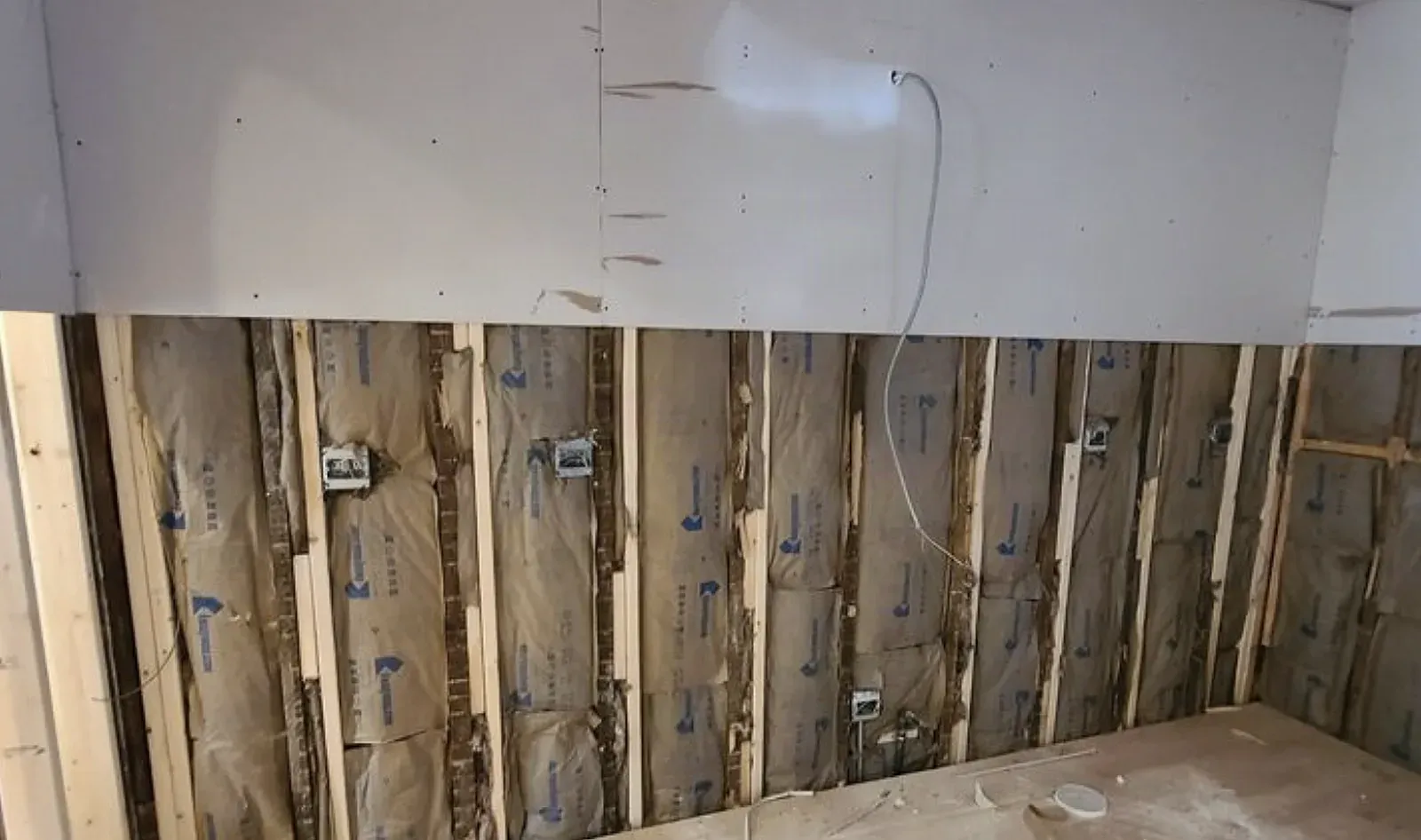
Drywall removal and demolition clears existing drywall, plaster, or sheetrock from a space, whether that’s a single damaged wall, a full room, or an entire commercial suite ahead of a tenant improvement buildout. Lynn Drywall & Plaster handles this as a controlled process, not just demo work: identifying what’s behind the wall before cutting, containing dust, protecting adjacent finished areas, and disposing of debris properly, including any pre-1978 material that needs lead-safe handling under EPA RRP practice.
This service is for commercial tenants and property owners near downtown Lynn’s civic and institutional core doing a tenant improvement buildout that needs existing interior walls cleared first, and for condo buyers and owners near the Diamond District or downtown converting or renovating a unit who need drywall or plaster stripped before reconfiguring the layout. It’s also for homeowners undertaking a gut renovation of a kitchen, bathroom, or full floor who need old material out before new framing and utilities are run, and for property owners with extensive water, mold, or fire damage across a large area where removal is more practical than patching.
Demolition as the first controlled step, not just tear-out
Removing drywall or plaster sounds like the simplest phase of a renovation, but rushed demo is one of the easiest ways to create expensive problems for the trades that follow. Cutting into a wall without knowing what’s behind it risks nicking wiring, damaging plumbing, or compromising framing that a homeowner or general contractor expected to reuse. Lynn Drywall & Plaster treats removal as a controlled, sectioned process: reviewing available plans, checking behind the surface as it goes, and flagging anything unexpected before it becomes the next trade’s problem.
Downtown Lynn’s commercial and institutional buildout work
Downtown Lynn’s mix of commercial storefronts, institutional space near North Shore Community College’s urban campus, and city and civic buildings generates a steady stream of tenant improvement work: new tenants taking over existing commercial space that needs its old interior walls cleared before a new floor plan goes in. Commercial demo scopes from architectural drawings rather than a homeowner’s verbal description, and pricing for that work is never published here since commercial buyers bid from plans, not a general estimate.
Lead-safe practice as a baseline, not a special case
Because nearly all of Lynn’s core housing predates the 1978 lead paint ban, EPA RRP lead-safe work practices apply to residential demolition here as a matter of course, not an occasional consideration. That means containing dust, using wet methods where appropriate, and disposing of debris according to lead-safe protocols whenever work happens in pre-1978 construction, which describes most of the Highlands, Wyoma, Pine Hill, and the shoe-era triple-decker stock across the city.
Drywall versus lath-and-plaster removal
The two materials come out differently. Drywall panels come down relatively quickly once fasteners are cut loose. Original lath-and-plaster, common throughout Lynn’s older housing, is heavier, dustier, and comes apart in irregular chunks rather than clean panels, since the plaster is keyed mechanically into wood or metal lath strips behind it. That difference changes both the labor time and the debris volume for an equivalent square footage, which is part of why the material gets confirmed before quoting a removal scope.
Sequencing demo so the next trade isn’t waiting
A renovation’s schedule usually has framing, electrical, and plumbing trades queued up right behind demolition, and a delay in the tear-out phase pushes every subsequent trade’s start date. Sequencing gets coordinated directly with the general contractor or homeowner, and the space is handed off broom-clean and fully cleared rather than left with debris or partial tear-out that the next trade has to work around.
Materials & standards
Products & materials we use
- USG Sheetrock
- Durock/cement board
Standards & codes we work to
- EPA RRP (pre-1978 lead-safe)
- Massachusetts State Building Code (780 CMR)
What the terms mean
- tear-out
- gut demolition
- lath and plaster removal
- containment
- tenant improvement
Options & variants
| Option | When it applies | Cost |
|---|---|---|
| Single wall or room tear-out | Renovation or damage repair limited to a defined area | Lower cost, contained scope |
| Full-unit or full-floor gut demo | Larger residential renovation or condo conversion | Higher cost, includes more debris removal and dust control |
| Commercial tenant improvement demo | Downtown Lynn commercial space clearing existing interior walls before buildout | Scoped and priced per plan, no pricing published here per commercial policy |
What affects cost
- • Square footage and number of rooms or walls being demolished.
- • Whether the material is drywall, faster removal, or original lath-and-plaster, slower, heavier debris.
- • Pre-1978 construction requiring EPA RRP lead-safe work practices during removal and disposal.
- • Access for debris removal, especially in dense downtown or triple-decker buildings without direct dumpster access.
- • Whether MEP (wiring, plumbing) needs to be worked around or is being removed in the same phase.
What to expect
- 1
Review the plan
The renovation or buildout plan gets reviewed with the customer or general contractor to confirm exactly what's being removed and what stays.
- 2
Check for lead-safe requirements
Pre-1978 construction gets checked and lead-safe handling requirements confirmed before demo begins.
- 3
Contain the work area
Plastic sheeting and floor protection contain the work area to keep dust out of adjoining rooms or units.
- 4
Cut and remove in sections
Drywall or plaster is cut and removed in sections, checking behind the wall for wiring, plumbing, or structural elements as work proceeds.
- 5
Bag and dispose of debris
Debris is bagged and removed, following proper disposal practices for any lead-containing material.
- 6
Leave the space broom-clean
The space is left broom-clean and ready for the next trade, whether that's framing, electrical, or finish work.
When this isn’t the right call
- If the project is a small patch or single hole rather than a full tear-out, drywall repair and patching is the better fit.
- If the goal is removing textured ceiling material specifically, not full wall demolition, popcorn ceiling removal is the better fit.
- If the space needs original plaster assessed for repair rather than removed outright, plaster repair and conversion is the better fit.
Frequently asked questions
Do you handle disposal of the removed material? +
Yes, debris is bagged and removed, following proper disposal practices, including lead-safe handling for material from pre-1978 construction.
How do you know what's safe to demo without hitting wiring or plumbing? +
The space and any available plans get reviewed before cutting, and work proceeds section by section so wiring, plumbing, or structural framing can be spotted before it becomes a problem.
Can you demo just one wall without disturbing the rest of the room? +
Yes, the work area is contained with plastic and floor protection specifically so a single-wall tear-out doesn't spread dust or debris into the rest of the space.
Is my building old enough that lead rules apply? +
Nearly all of Lynn's core housing predates 1978, so lead-safe practice is standard on residential demo unless the building's construction date rules it out.
Do you also handle the framing and new drywall after demo? +
The full sequence from tear-out through new drywall installation can be coordinated, or a clean, demo-complete space can be handed off to your general contractor's schedule.
How long does a full room or unit demo take? +
It depends on square footage and whether the material is drywall or heavier lath-and-plaster, but a specific timeline gets given once the space is walked and the scope confirmed.