
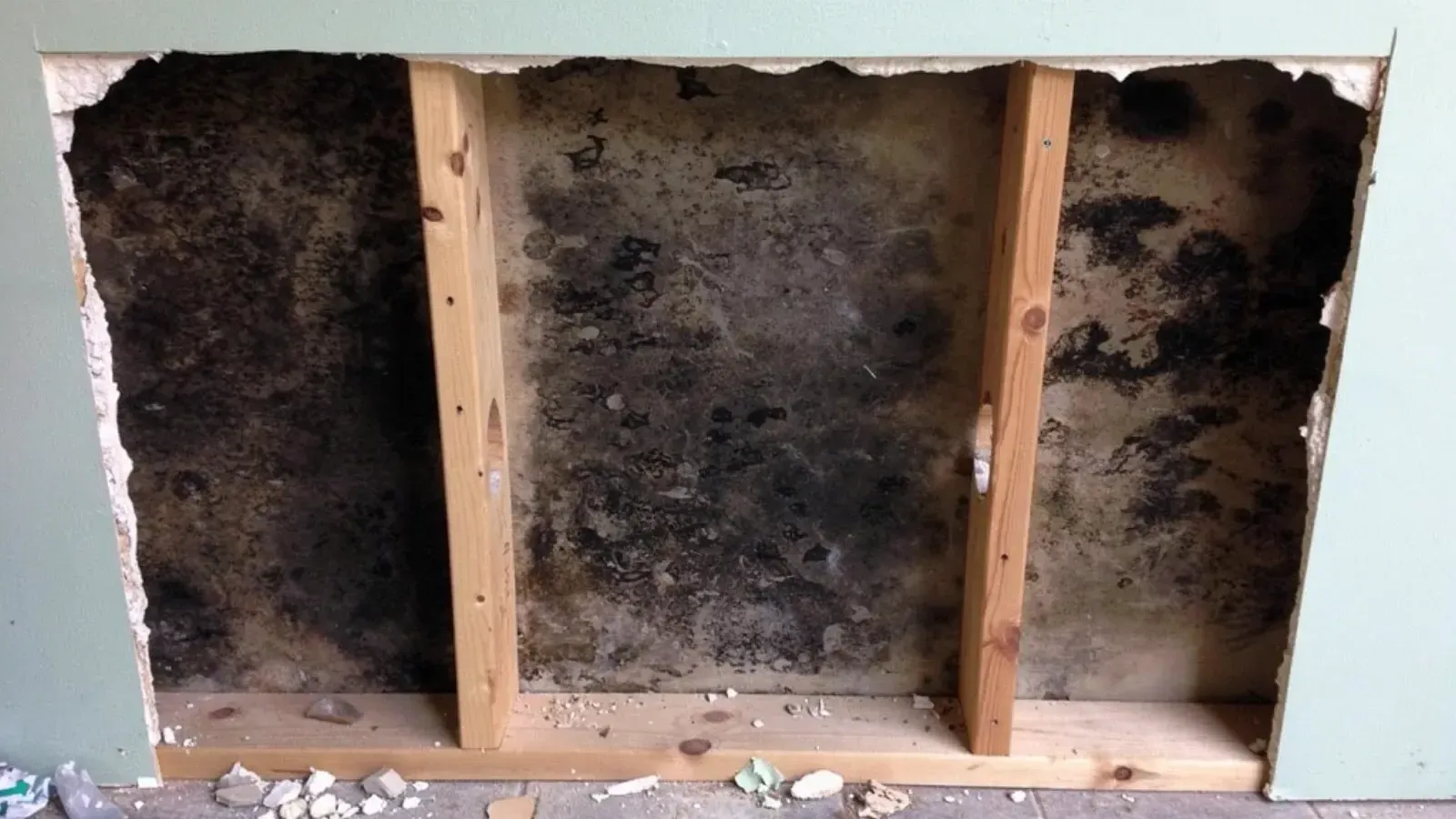
Signs you need this
- • Black, green, or gray spotting spreading across a wall or the back of a baseboard, most often low on a basement wall or behind furniture on an outside wall.
- • A persistent musty, earthy smell in a room that does not go away with cleaning or air freshener.
- • Occupants with worsening congestion, coughing, or allergy-like symptoms that ease when they leave the house.
Lynn Drywall & Plaster removes drywall that mold has colonized, contains the area so spores do not spread through the home while it comes out, and rebuilds with mold-resistant board so the problem is less likely to return. The service pairs the removal with finding and calling out the moisture source, because new drywall over a wall that is still getting wet will simply grow mold again. Heavier growth is coordinated with a remediation firm; the drywall scope is the tear-out, the containment, and the clean rebuild.
This service is for homeowners with damp, below-grade basements, common across Lynn’s older housing, where humidity and groundwater keep the lower walls wet enough to grow mold. It is for landlords and property managers in the dense Brickyard triple-deckers and two-families, where high rental turnover and tenant health complaints drive fast mold-scope turnarounds, and for owners in West Lynn and East Lynn dealing with mold on exterior walls where old insulation and cold, damp framing cause condensation inside the assembly. It also fits anyone who has had a slow, hidden leak that stayed wet long enough for the cavity to grow before it was ever noticed.
By the time you see it, the board is colonized
Mold on drywall shows up as black, green, or gray spotting low on a basement wall or behind furniture on a cold outside wall, along with a musty smell that cleaning never clears. What is visible on the surface is the late stage, not the start. Drywall is paper on a gypsum core, and both are food for mold, so by the time the face is spotted the growth has usually worked into the paper and the core where wiping cannot reach it. That is why Lynn Drywall & Plaster removes the colonized board rather than treating the surface: a cleaned wall that still has growth in the core is a wall that comes back.
The half of the job a cosmetic patch skips
Removing the board is only half the work, and it is the half a quick patch tends to skip. New drywall over a wall that is still getting wet simply grows mold again, so the crew finds and calls out the moisture source before rebuilding, whether that is a chronically damp below-grade basement, condensation forming inside a cold exterior wall, or a slow hidden leak that stayed wet long enough for the cavity to colonize. In a space that will stay damp, the rebuild uses mold-resistant board and cement board where the wall meets grade, so the replacement is not just clean but harder to recolonize.
Containment is what keeps a local problem local
Cutting into moldy board without sealing the area first spreads spores through the rest of the house on the air and on the crew, turning a contained patch into a whole-home problem. The work zone gets sealed off before any colonized board is disturbed, the material is cut out and bagged inside that containment, and the exposed framing and cavity are checked to confirm they are dry and sound before anything new goes up. In an occupied triple-decker or two-family in the Brickyard, where tenant health complaints and fast turnovers drive these calls, that containment discipline is the difference between fixing one unit and disturbing a whole building.
When it is a remediation job, not a drywall job
There is an honest line between a drywall scope and a remediation scope. A contained patch, a defined section of wall or ceiling, is drywall work: contain, remove, address the source, rebuild. Heavy or health-sensitive growth across a whole home is a job for a licensed remediation firm to lead, and Lynn Drywall & Plaster coordinates with that firm and picks up the clean rebuild after clearance rather than pretending a spreading infestation is a patch. Across Lynn’s older housing, from damp basements citywide to cold, poorly insulated exterior walls in West and East Lynn, the crew says plainly which one a given wall actually is.
Materials & standards
Products & materials we use
- USG Sheetrock
- purple/mold-resistant board (M2Tech)
- National Gypsum Gold Bond
- DensArmor
- Durock/cement board
- RedGard
Standards & codes we work to
- Massachusetts State Building Code (780 CMR)
- ASTM C1396
- GA-214 finish levels
- MassDEP
- EPA RRP (pre-1978 lead-safe)
What the terms mean
- mold-resistant board
- containment
- moisture source
- moldy drywall removal
- cement board
- sealer primer
- mud and tape
- cavity check
Options & variants
| Option | When it applies | Cost |
|---|---|---|
| Contained section removal | Growth is limited to a defined patch of wall or ceiling | Lower; contain, cut out the affected board, rebuild with mold-resistant board |
| Basement wall replacement | Below-grade walls colonized by chronic damp | Moderate; larger tear-out, mold-resistant board, sometimes cement board at grade |
| Full-room strip and rebuild | Widespread growth across an exterior wall or unit | Higher; full removal, containment, and re-finish |
| Remediation-coordinated rebuild | Heavy or health-sensitive growth needing a remediation firm | Scoped with the remediation contractor; drywall picks up after clearance |
What affects cost
- • How far the mold has spread: a contained patch is a small job, while growth running the length of a basement wall is a full replacement.
- • The level of containment required, since sealing off the work area and controlling spore spread adds labor beyond a plain patch.
- • Whether a separate remediation firm has to handle the growth before the drywall is rebuilt, which happens with heavier or health-sensitive cases.
- • The board specified for the rebuild, because mold-resistant and cement board cost more than standard gypsum but are the right call in a damp space.
- • The pre-1978 age of most Lynn homes, which brings lead-safe (EPA RRP) practice into play when old painted surfaces are disturbed.
What to expect
- 1
Inspect and scope
Lynn Drywall & Plaster inspects the growth, finds where the moisture is coming from, and flags whether the drywall scope can proceed or a remediation firm is needed first.
- 2
Seal off containment
The work area is sealed off with containment so spores do not travel to the rest of the home while the board is disturbed.
- 3
Remove and bag
The colonized drywall is cut out and bagged, and the exposed framing and cavity are checked to confirm they are dry and sound.
- 4
Address the source
The moisture source is addressed or clearly handed off, because rebuilding over a wall that is still wet only restarts the growth.
- 5
Rebuild with mold-resistant board
Mold-resistant board goes up in place of the removed drywall, taped and finished to match the room.
- 6
Clean and explain
The area is cleaned down and walked through, with the source issue spelled out so it does not come back.
When this isn’t the right call
- If the drywall is wet from a fresh leak or flood but has not yet grown, it is a straight water repair, handled before mold sets in with water damage drywall repair.
- If the growth is a heavy, extensive infestation across a whole home, it needs a licensed remediation firm to lead, with the drywall rebuild following clearance.
- If the surface is stained but tests clean and dry with no actual growth, it only needs sealing and refinishing, which is closer to ceiling repair.
Frequently asked questions
Can you just clean the mold off my drywall instead of replacing it? +
Surface mildew on paint can sometimes be cleaned, but once mold has grown into the paper face and core of the drywall, cleaning does not reach it. That board has to come out and be replaced.
How do you stop the mold from spreading to the rest of my house during the work? +
Lynn Drywall & Plaster seals off the work area with containment before disturbing any moldy board, so spores stay in the work zone and are removed with the material rather than spread through the home.
Will the mold just come back after you put new drywall up? +
Not if the moisture source is fixed. That is why the crew finds and calls out where the water is coming from before rebuilding, and uses mold-resistant board so a damp space is far less likely to grow again.
My basement wall keeps getting moldy every year, what will actually fix it? +
Lynn Drywall & Plaster can replace the moldy drywall with mold-resistant board, but a basement that grows mold every year usually has a damp or drainage problem that needs addressing too, and the crew will tell you plainly what the real fix is.
Do I need a mold remediation company or can you handle it? +
For a contained patch, the drywall scope covers the removal, containment, and rebuild. Heavy or health-sensitive growth is coordinated with a licensed remediation firm, and Lynn Drywall & Plaster rebuilds once the area is cleared.
Is the black mold on my wall dangerous? +
Any significant indoor mold is worth taking seriously, especially for anyone with breathing issues. The safe approach is to contain and remove the affected drywall rather than disturb it in an occupied room, which is how the work is handled.