
Signs you need this
- • A condo owner near the Lynnway corridor or downtown can clearly hear a neighbor's TV, footsteps, or conversation through a shared party wall.
- • A homeowner in a triple-decker unit near the MBTA Lynn commuter rail line notices train and street noise carrying through exterior walls into bedrooms.
- • Someone setting up a home office, music practice space, or media room wants the sound contained rather than carrying into the rest of the house or into an adjoining unit.
- • A recurring noise complaint between neighboring condo units prompts an association or owner to look for a permanent fix rather than an ongoing dispute.
Soundproof drywall installation reduces sound transmission through a wall or ceiling assembly using specialized board, added mass, and decoupling techniques, rather than relying on standard drywall alone. Lynn Drywall & Plaster installs sound-dampening products like QuietRock in place of, or layered with, standard board on party walls, demising walls between units, and rooms where sound containment matters. The approach depends on whether the goal is blocking sound from entering a room, containing sound inside it, or both, which changes which wall assembly makes sense.
This service is for condo owners and associations in multi-unit buildings near downtown Lynn and the Lynnway corridor dealing with party-wall noise between units, and for homeowners in triple-deckers or two-families near the MBTA Lynn commuter rail line and its Newburyport/Rockport line traffic, wanting quieter bedrooms or living spaces. It’s also for anyone converting a room into a home office, music space, or media room who needs to contain sound within that room, and for landlords addressing tenant noise complaints in multi-unit rental buildings, particularly around shared walls or floors.
Why standard drywall doesn’t stop sound
Standard sheetrock is a rigid, relatively lightweight panel, and rigid lightweight materials transmit vibration efficiently rather than absorbing it. Sound moving through a typical interior wall passes through the drywall, across the studs, and through the drywall on the other side with only modest loss. Reducing that transmission means either adding mass (a heavier, denser panel), adding damping (a viscoelastic layer inside the panel that converts vibration to heat), or decoupling the two wall faces so vibration can’t travel directly stud to stud. QuietRock and similar products build mass and damping into the panel itself, which is why they perform meaningfully better than layering extra standard board without changing anything else about the assembly.
Condo party walls near downtown and the Lynnway
Multi-unit buildings near downtown Lynn and the Lynnway corridor put unrelated households on either side of a single shared wall, and older demising wall construction in this area wasn’t always built to a sound-isolation standard, especially in converted or older multi-family stock rather than purpose-built condo towers. That’s the most common soundproofing call here: an owner who can hear a neighbor’s television or footsteps clearly enough that it’s become a daily irritant, sometimes escalating into an association dispute. Treating the shared wall with a mass-loaded board like QuietRock, ideally combined with decoupling if the wall can be opened, is the direct fix, more reliable long-term than negotiating with a neighbor about volume.
Rail and street noise versus wall assembly limits
Homes near the MBTA Lynn commuter rail station and the Newburyport/Rockport line corridor deal with a different kind of noise: exterior, airborne, and intermittent rather than a constant neighbor issue. A soundproofed wall assembly does reduce how much of that noise penetrates an exterior wall, but windows are frequently the weaker link in that noise path, and a wall upgrade alone won’t fully solve a rattling single-pane window letting train noise straight through.
Retrofit versus full rebuild, and what each actually buys
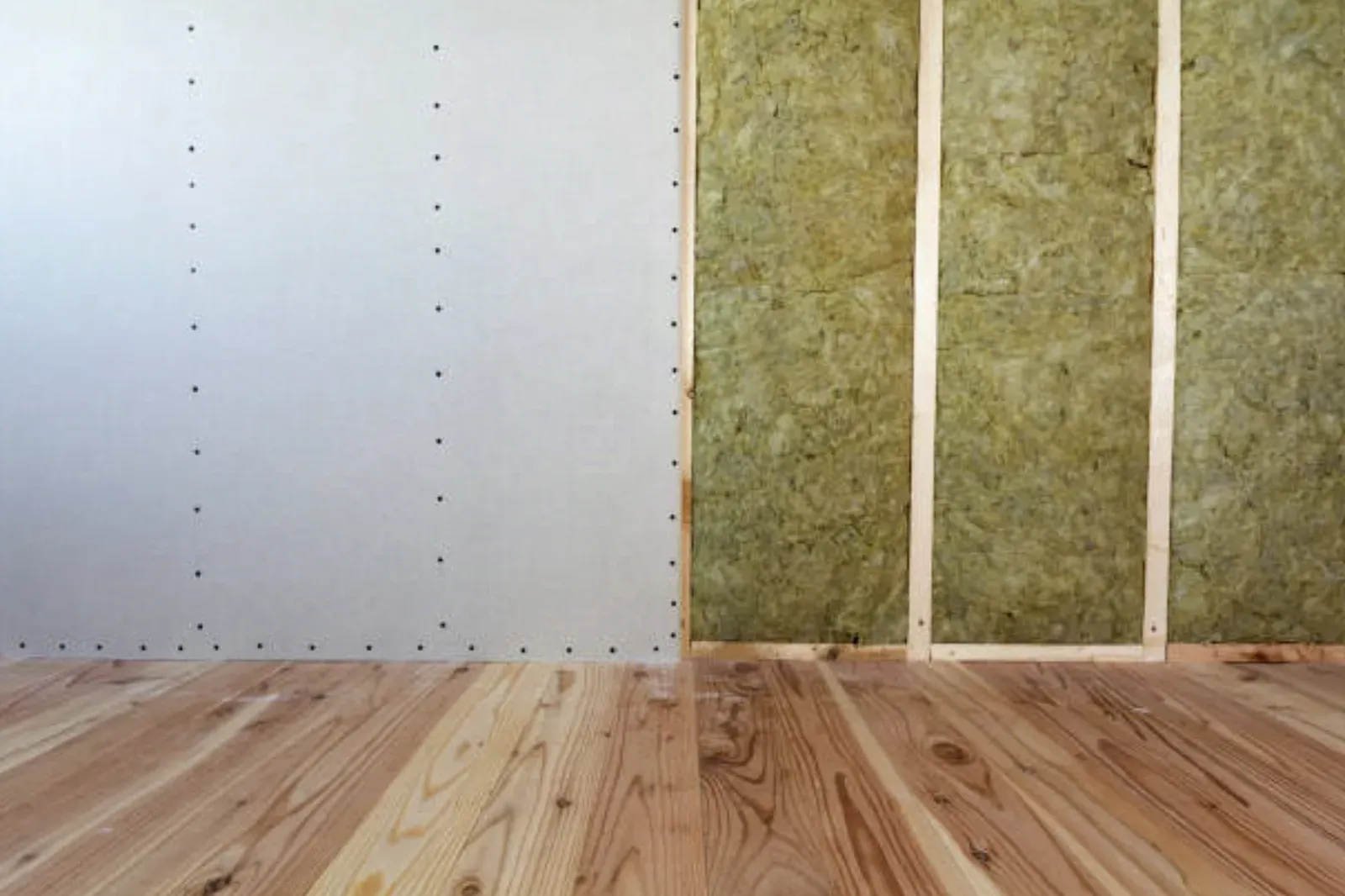
The single biggest factor in how much sound reduction a project achieves is whether the wall gets opened to the studs. A retrofit, adding a layer of sound-dampening board directly over existing drywall, is less disruptive and less expensive, and it does measurably help, but it can’t add resilient channel or true stud decoupling without opening the wall. A full rebuild, removing the existing drywall, adding resilient channel or staggered framing where the design allows it, then installing QuietRock or a double-layer assembly, gets meaningfully further toward blocking both airborne and impact noise. Both options get walked with the customer against their budget and how serious the noise problem actually is, rather than defaulting to the more expensive assembly by default.
Setting expectations honestly
No assembly, however well built, makes a shared wall silent. The realistic outcome gets described in plain terms before work starts: conversation and TV volume drop to a much less intrusive level, but a loud argument or bass-heavy music will still be somewhat audible. Overselling the result is how a customer ends up disappointed with correctly installed work.
Materials & standards
Products & materials we use
- QuietRock
- USG Sheetrock
Standards & codes we work to
- Massachusetts State Building Code (780 CMR)
What the terms mean
- demising wall
- party wall
- resilient channel
- decoupling
- mass-loaded board
- airborne versus impact noise
Options & variants
| Option | When it applies | Cost |
|---|---|---|
| QuietRock panel installation | Party wall or demising wall between condo units or apartments | Higher material cost than standard board, straightforward install |
| Double-layer drywall with resilient channel | New construction or full renovation where the wall can be opened to add decoupling hardware | Higher labor, most effective sound reduction |
| Mass-loaded or added-layer retrofit | Existing wall staying largely intact, sound reduction added without full teardown | Moderate cost, less reduction than a full decoupled assembly |
What affects cost
- • Whether the wall is new construction or an existing wall being retrofitted, since retrofits are more limited without opening the wall fully.
- • Square footage of the wall or ceiling assembly being treated.
- • Product selection, since QuietRock and similar mass-loaded boards cost more than standard sheetrock.
- • Whether resilient channel or decoupling hardware is added, which requires opening the wall to the studs.
- • Whether the work is a single wall (one condo party wall) or a full room's worth of walls and ceiling for a home office or studio.
What to expect
- 1
Assess the noise and wall
The wall assembly and the noise complaint get assessed, distinguishing airborne noise like voices and TV from impact noise like footsteps, since they call for different solutions.
- 2
Choose retrofit or rebuild
Whether a retrofit over the existing wall or a full teardown-and-rebuild assembly fits the budget and the level of reduction needed gets discussed.
- 3
Remove or prep the wall
Existing drywall is removed if the assembly is being rebuilt, or the surface is prepared for a layered retrofit if not.
- 4
Install sound-dampening board
Sound-dampening board, such as QuietRock, and any resilient channel or decoupling hardware called for in the chosen assembly gets installed.
- 5
Tape, finish, and texture-match
The new surface is taped, finished, and texture-matched to the rest of the room.
- 6
Set realistic expectations
Realistic expectations for the noise reduction achieved get walked through, since no assembly eliminates sound entirely.
When this isn’t the right call
- If the noise issue is coming through a floor or ceiling rather than a wall, that typically needs a flooring or ceiling assembly change beyond drywall alone, which gets flagged during assessment.
- If the wall just has ordinary cosmetic damage and sound isn't the concern, drywall repair and patching is the better fit.
- If the underlying wall is failing lath-and-plaster that needs structural attention before any soundproofing layer goes on, plaster repair and conversion is the better fit.
Frequently asked questions
Will soundproof drywall eliminate noise completely? +
No assembly eliminates sound entirely. It significantly reduces how much carries through, especially voices and TV, and realistic expectations get set before the work starts.
What's QuietRock and how is it different from regular drywall? +
It's a mass-loaded, multi-layer panel engineered specifically to reduce sound transmission, unlike standard sheetrock which offers minimal sound dampening on its own.
Can you soundproof an existing wall without tearing it open? +
Yes, a retrofit layer of sound-dampening board over the existing wall reduces noise, though a full teardown with decoupling hardware achieves more reduction if the budget and scope allow it.
Does this help with train or street noise, not just neighbors? +
It can help, particularly for airborne noise like street traffic or nearby rail activity, though exterior noise sometimes also involves windows, which are outside this scope.
Is this something a condo association typically approves, or is it up to individual owners? +
That depends on your building's bylaws and whether the party wall is common or unit-owned. Checking with your association before work begins on a shared wall is recommended.
How long does a typical soundproofing installation take? +
A single retrofit wall is often a short job. A full room rebuild with decoupling hardware takes longer, since it involves opening the wall to the studs first.