Signs you need this
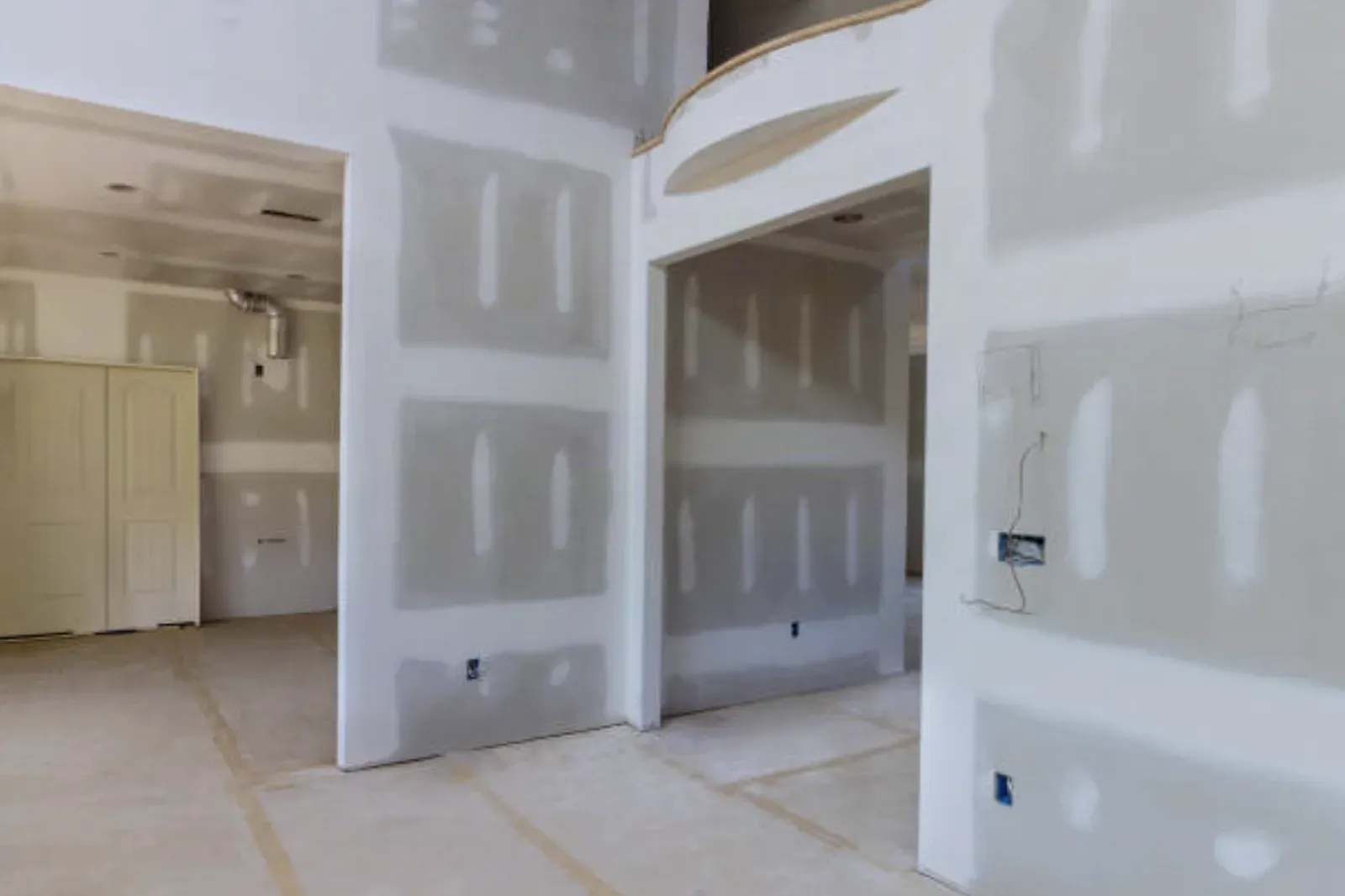
- • Board hung throughout a unit with every seam, screw dimple, and inside corner still visible, bare gray panel with no way to paint over it cleanly.
- • A vacant triple-decker or two-family unit in West Lynn or the Brickyard sitting unrentable because the finish work stalled after another trade hung the board.
- • Visible ridging, flashing under paint, or seams telegraphing through a prior finish job that was rushed or under-sanded.
Lynn Drywall & Plaster tapes, muds, and sands hung drywall to a smooth, paint-ready finish, typically a GA-214 Level 4 for standard walls and ceilings or a Level 5 skim where lighting conditions or a high-end finish call for it. This is the layer between a hang and paint: embedding tape in the first coat, building and feathering successive coats over seams and corners, and sanding the surface flat before priming. On rental turnover work, the emphasis is a consistent, repeatable finish that holds up across multiple units without callbacks.
This service is for landlords and property managers turning over triple-decker and two-family units in West Lynn, East Lynn, and the Brickyard, where high renter turnover means finish speed and consistency across units both matter, and for homeowners or GCs who hung their own board, or had a framing crew hang it, and need a dedicated finisher to tape, mud, and sand to a paintable level. It also fits condo associations managing unit-turnover finish work across multiple units, and anyone whose finish work has visible flaws, ridging, joint cracking, flashing under paint, from a prior job and needs it redone properly rather than patched.
What a finish level actually buys you
Level 4 and Level 5 are not marketing grades, they describe how much compound goes over the surface and where. A Level 4 finish, the standard three-coat tape-and-mud on seams, screws, and corners, is right for most walls and ceilings under normal light. A Level 5 adds a thin skim of compound over the entire surface, and it earns its cost in exactly the situations where a Level 4 would fail the eye: a wall washed by side light from a window, a ceiling under LED cans, or any surface getting a gloss or semi-gloss paint that reads every ridge. Lynn Drywall & Plaster calls the level to the lighting and the paint, so a homeowner is not paying for a full skim where it will never show, and not stuck with visible flashing where it will.
Turnover finishing is a repeatable standard, not a one-off
In the dense triple-decker and two-family stock of West Lynn, East Lynn, and the Brickyard, a vacant unit stalled at bare, taped board is lost rent for every week it sits, and a landlord turning several units wants them to match rather than each read to a slightly different standard. Lynn Drywall & Plaster schedules a building’s units back to back and holds the same finish level across all of them, which is both faster per unit and more consistent than treating each apartment as a separate job. Condo associations managing unit-turnover work get the same treatment across the association.
Inheriting someone else’s board
A hang done by a framing crew or the previous trade is a normal starting point, and as long as the fastening is sound and the seams are not gapped wide, the finish goes right over it. Where it is not sound, the crew flags it before taping rather than burying the problem, because a coat of compound over a loose screw or a proud joint just telegraphs it back through the paint. Fixing ridging or flashing left by a rushed prior finish is common work here: the affected area is sanded back and recoated properly, not skimmed over in place where the flaw would return.
Why the last step is a light, not a hand
The finish is judged under raking light, not by running a hand across the wall, because the seams and dimples that a palm glides over are exactly the ones a low-angle light throws into relief once the room is painted. The dried compound is sanded smooth, the dust is cleaned up, and the surface is checked against that light before it is called paint-ready. That check is what keeps a callback from showing up the first evening the homeowner turns on a lamp near the wall.
Materials & standards
Products & materials we use
- USG Sheetrock
- FibaTape
- joint compound
- corner bead
Standards & codes we work to
- GA-214 finish levels (Level 0 through 5)
What the terms mean
- taping
- mudding
- feathering
- skim coat
- Level 4 finish
- Level 5 finish
- raking light
- corner bead
- unit turnover
Options & variants
| Option | When it applies | Cost |
|---|---|---|
| Level 4 standard finish | Typical walls and ceilings under normal lighting, most rental and residential work | Standard cost; three-coat tape and mud process |
| Level 5 skim coat | Glossy paint, raking light, or high-visibility walls where flashing would show | Higher cost; full skim coat over the entire surface |
| Turnover finish, multiple units | Landlord or PM managing several units in the same building or portfolio | Priced per unit, often scheduled back to back for consistency |
| Repair and refinish of prior work | Visible ridging, cracking, or flashing from a previous finish job | Scoped to the affected area; may require sanding back before recoating |
What affects cost
- • Finish level: a Level 4 standard finish costs less than a full Level 5 skim coat across every surface.
- • Ceiling versus wall work, since ceiling finishing is slower and shows flaws more readily under light.
- • The condition of the hang itself: well-hung board with tight seams finishes faster than board with wide gaps or poor fastening that has to be corrected first.
- • Number of inside and outside corners, since corner bead and inside-corner taping add time per linear foot compared to a flat field.
- • Turnover volume: finishing several units back to back in one building is more efficient per unit than a single standalone job.
What to expect
- 1
Inspect the hang
Lynn Drywall & Plaster inspects the hang, checking screw seating and seam gaps before taping begins, and flags anything that needs re-fastening first.
- 2
Embed the first coat
Paper or mesh tape is embedded in the first coat of joint compound over every seam and corner.
- 3
Feather and build corners
A second, wider coat feathers the seam out beyond the tape, and inside corners and outside corner bead are built up in the same pass.
- 4
Finish flat
A third coat, or a full skim if Level 5 is called for, finishes the surface flat.
- 5
Sand and check under light
The dried compound is sanded smooth, dust is cleaned up, and the surface is checked under raking light before it's called paint-ready.
When this isn’t the right call
- If the board is not yet hung, that is the drywall installation and hanging service, which has to happen first.
- If the issue is water damage or mold behind an existing finished wall rather than a fresh hang needing its first finish, that calls for the appropriate repair service instead.
- If the finish problem is on plaster rather than drywall, that is a plaster repair and conversion job, which uses different materials and technique than taping drywall seams.
Frequently asked questions
What is the difference between Level 4 and Level 5 finish? +
Level 4 is the standard three-coat tape and mud finish used on most walls and ceilings. Level 5 adds a full skim coat over the entire surface, which is used where glossy paint or strong side lighting would otherwise show every seam.
Can you finish just one unit in a triple-decker, or does it need to be the whole building? +
Single units are common. Lynn Drywall & Plaster also schedules multiple units back to back for landlords turning over several apartments at once.
Someone else hung the board, can you still do the finish? +
Yes, as long as the hang itself is sound. If the seams are too wide or fastening is loose, that gets corrected first so the finish holds.
How long does taping and finishing take for a typical unit? +
It depends on square footage and finish level, since each coat needs to dry before the next goes on. A standard Level 4 finish moves faster than a full Level 5 skim.
Can you match the finish across multiple units so they look consistent? +
Yes, that consistency is the point of scheduling a landlord's units together rather than treating each as a one-off.
Do you fix ridging or flashing from a previous finish job? +
Yes. The affected area is sanded back and recoated properly rather than patched over the existing flaw.